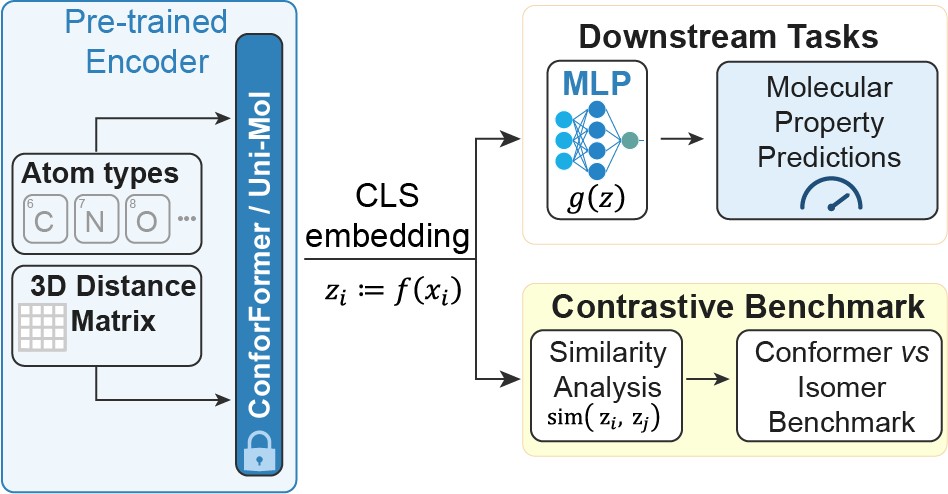
Not even a week after giving a plenary talk in Bremen, Evgeny Pidko gave yet another plenary talk titled "AI for Computational Catalysis: Rethinking the Active Sites in Heterogeneous Catalysis", this time at te AIChemy symposium hosted at the Imperial College in London focussed on the application of AI for catalysis and energy materials discovery.
About the Group
The ISE group led by prof. dr. Evgeny Pidko advances theory-guided catalyst design across molecular and heterogeneous catalysis. We connect quantum chemical calculations with kinetic studies, in situ spectroscopy, and high-throughput experimentation to understand catalytic function under operating conditions.
A unifying theme is learning from what goes wrong: the active state is an ensemble of chemical entities whose behavior is shaped by environment, promoters, solvent, confinement, and operating conditions. By decoding catalytic and off-cycle chemistry — including side reactions and deactivation mechanisms — we guide the optimization and design of more durable and efficient systems.
We develop automated workflows, reaction network analysis, and employ innovative data-driven approaches with FAIR data practices to make research more reproducible, understanding deeper, and discoveries ever more exciting.
Contact
Prof. Dr. Evgeny A. Pidko
+31 (0)15 27 81938
Building 58, E2.020 · Van der Maasweg 9
2629 HZ Delft, The Netherlands
News & Updates
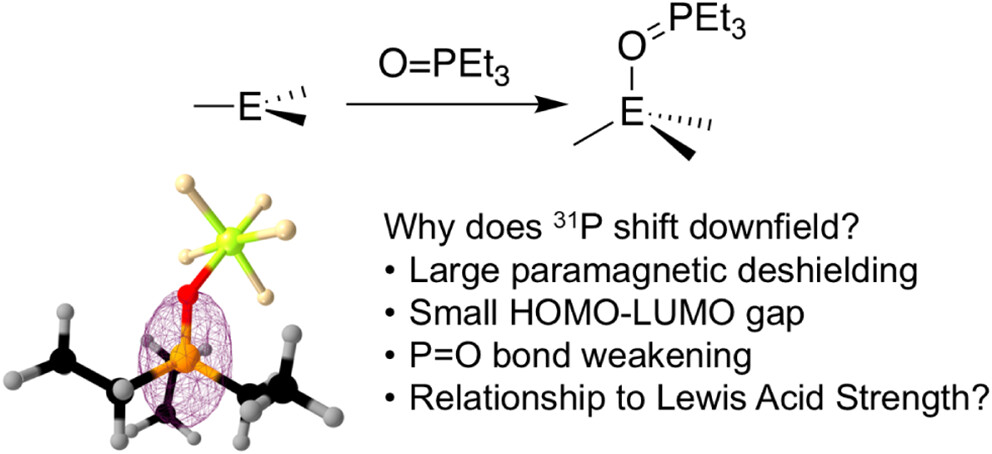
Evgeny Pidko & Alexander Kolganov represented the TU Delft ISE group at the Constructive Atomistic Modeling conference hosted by the Constructor University in Bremen, Germany. Pidko was invited as a plenary speaker and gave a comprehensive talk on the challenges of conformation and condition spaces for data-driven catalyst design. Kolganov gave an enlightening oral presentation on the origin of the 31P-NMR shift in Lewis Acid-TEPO adducts, as recently published in JACS.
New publication with Alexander Kolganov as first author on the origin of the 31P NMR chemical shift in Lewis acid adducts of triethylphosphine oxide. In this paper the authors explore what the well-established Gutmann-Beckett method really measures.
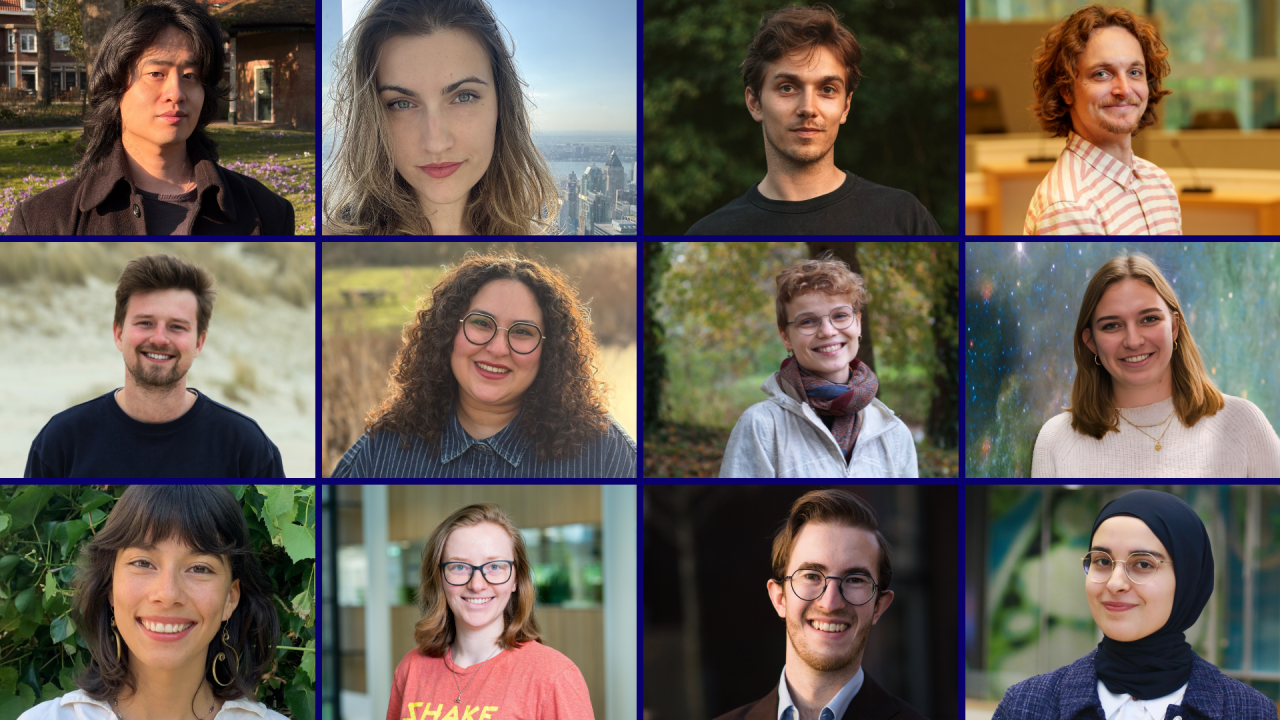
Sumeia Yassiri is chosen as one of the twelve Faces of Science of the Royal Netherlands Academy of Arts and Sciences (KNAW) this year. In this role, she not only represents the Faculty of Applied Sciences but also contributes to increasing the visibility of young researchers across the Netherlands.
EAP together with prof. Grozema organized annual CTC Spring Symposium at TU Delft, bringing together the Dutch community in Computational and Theoretical Chemistry.
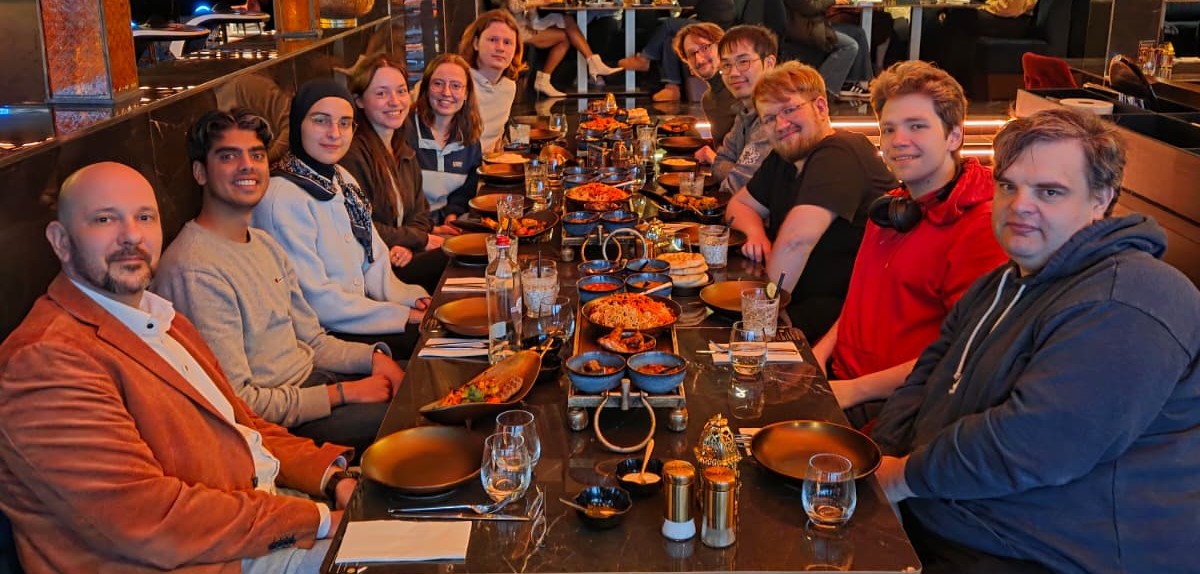
Group dinner in Rotterdam
An evening of solving puzzles and enjoying Afghan food together.
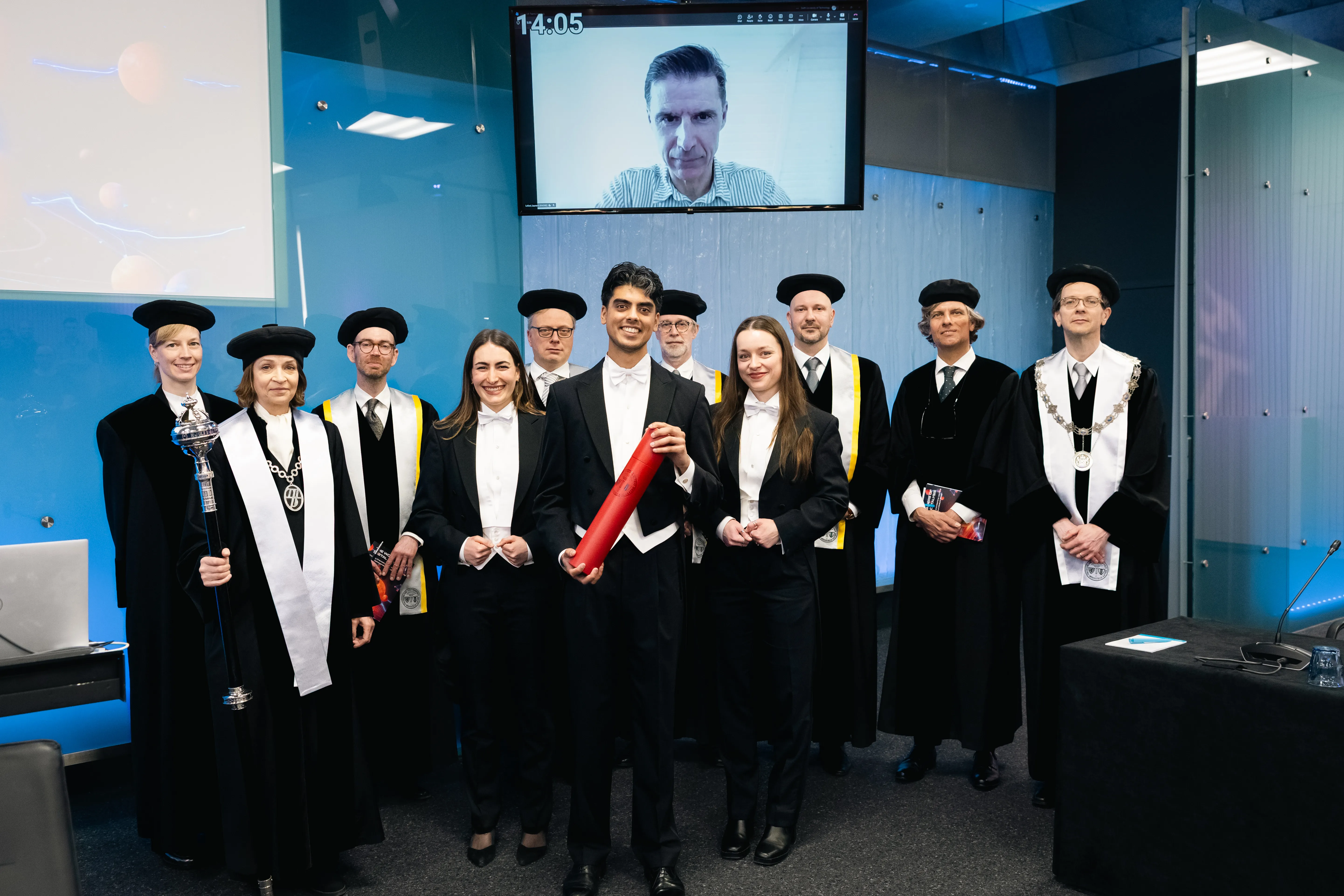
Adarsh defended his PhD thesis "The wonders of digital catalysis" with a Cum Laude distinction.
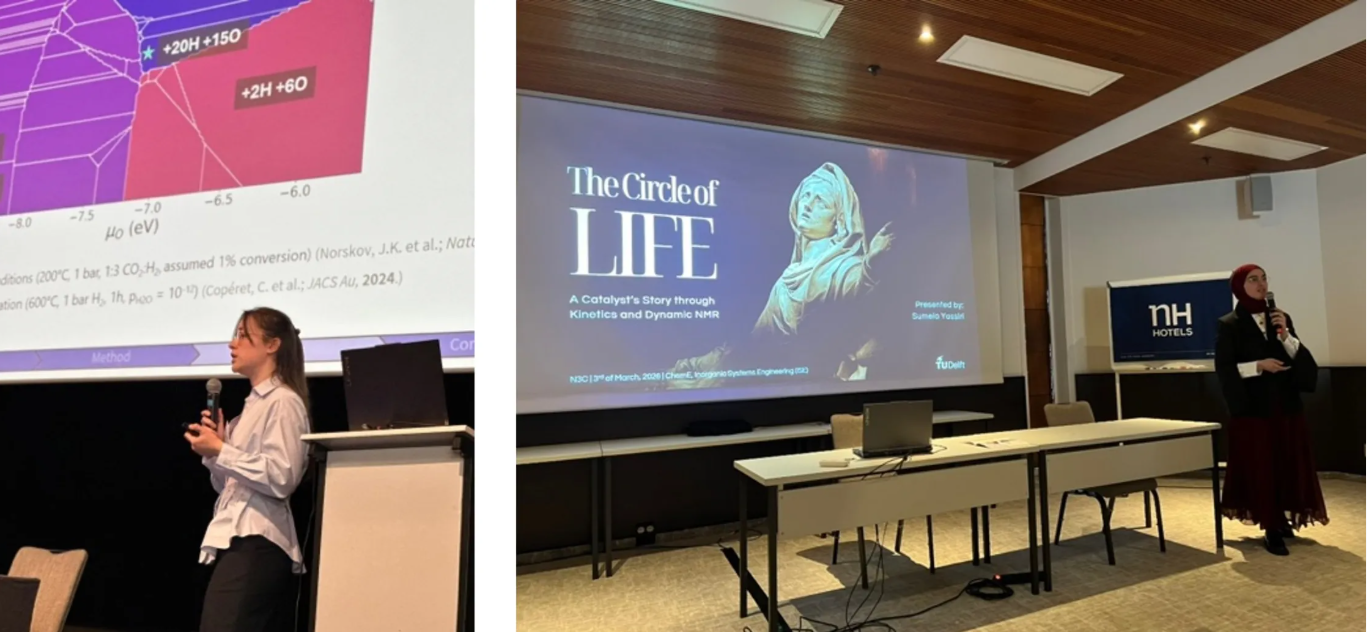
Sumeia Yassiri and Margareth Baidun both won best Lecture Award at the NCCC conference.
Keynote at the UKCC
EAP gave a keynote talk on Condition-Dependent Dynamics for Data-Driven Catalyst Design at the UK Catalysis Conference in Loughborough.
Research Areas
Computational Catalysis & Operando Modeling
In silico studies of reaction mechanisms and real-time computational description of catalytic systems under working conditions
Data-Driven Catalyst Design
Machine learning approaches for accelerating catalysis research and discovery
Homogeneous Catalysis
Kinetic studies, development and optimization of molecular catalysts
Heterogeneous Catalysis
Theory and practice of catalytic conversions at interfaces and in confined spaces
Sustainable Chemistry
CO₂ utilization, biomass conversion, plastic upcycling
Student Projects & Openings
Routes for BSc, MSc, and early-career researchers to join the group
Thesis Projects
In-depth research projects in computational catalysis, data-driven design, operando-inspired analysis, and sustainable chemistry.
BScResearch Projects
Focused student projects that build scientific writing, data handling, literature analysis, and introductory modeling skills.
OpeningsJoin the Group
Information on student opportunities, contact routes, and how formal PhD or postdoctoral vacancies are typically announced.
Projects, Consortia & Collaborations
Key research projects, organizations, and symposia we actively participate in