Catalysis, Computational Chemistry & Sustainable Catalytic Solutions
The ISE group (Chemical Engineering department, TU Delft) led by prof. dr. Evgeny Pidko advances theory-guided catalyst design across molecular and heterogeneous catalysis. We connect quantum chemical calculations with kinetic studies, in situ spectroscopy, and high-throughput experimentation to understand catalytic function under operating conditions.
A unifying theme is learning from what goes wrong: the active state is an ensemble of chemical entities, which behavior is shaped by environment, promoters, solvent, confinement, and operating conditions. By decoding the catalytic and off-cycle chemistry including side reactions, and deactivation mechanisms, we guide the optimization and design of more durable and efficient catalytic systems. We develop automated workflows, reaction network analysis, and employ innovative data-driven approaches and implement FAIR data practices to make research more reproducible, understanding of catalytic chemistry deeper and discoveries ever more exciting.
+31 (0)15 27 81938
E.A.Pidko@tudelft.nl
ISE/ChemE/TNW/TU Delft
Building 58, E2.020
Van der Maasweg 9
2629 HZ Delft
The Netherlands
Els Arkesteijn
+31 15 27 81516
E.M.P.Arkesteijn@tudelft.nl
EAP together with prof. Grozema organized annual CTC Spring Symposium at TU Delft. This annual meeting brings together the Dutch community in Computational and Theoretical Chemistry (CTC).
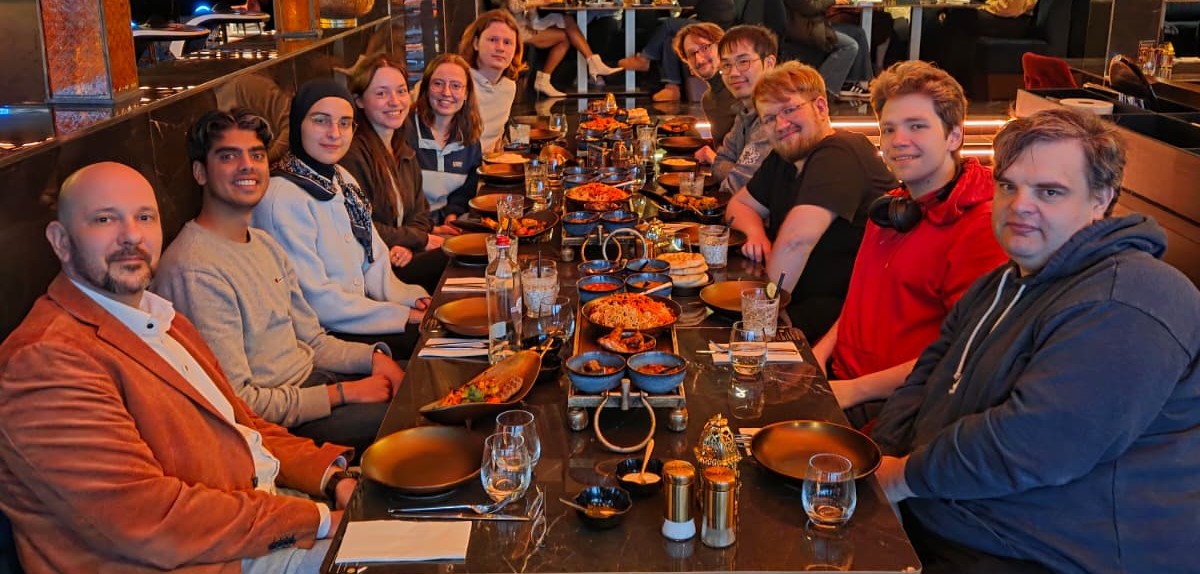
An evening of solving puzzles enjoying Afghan food together.
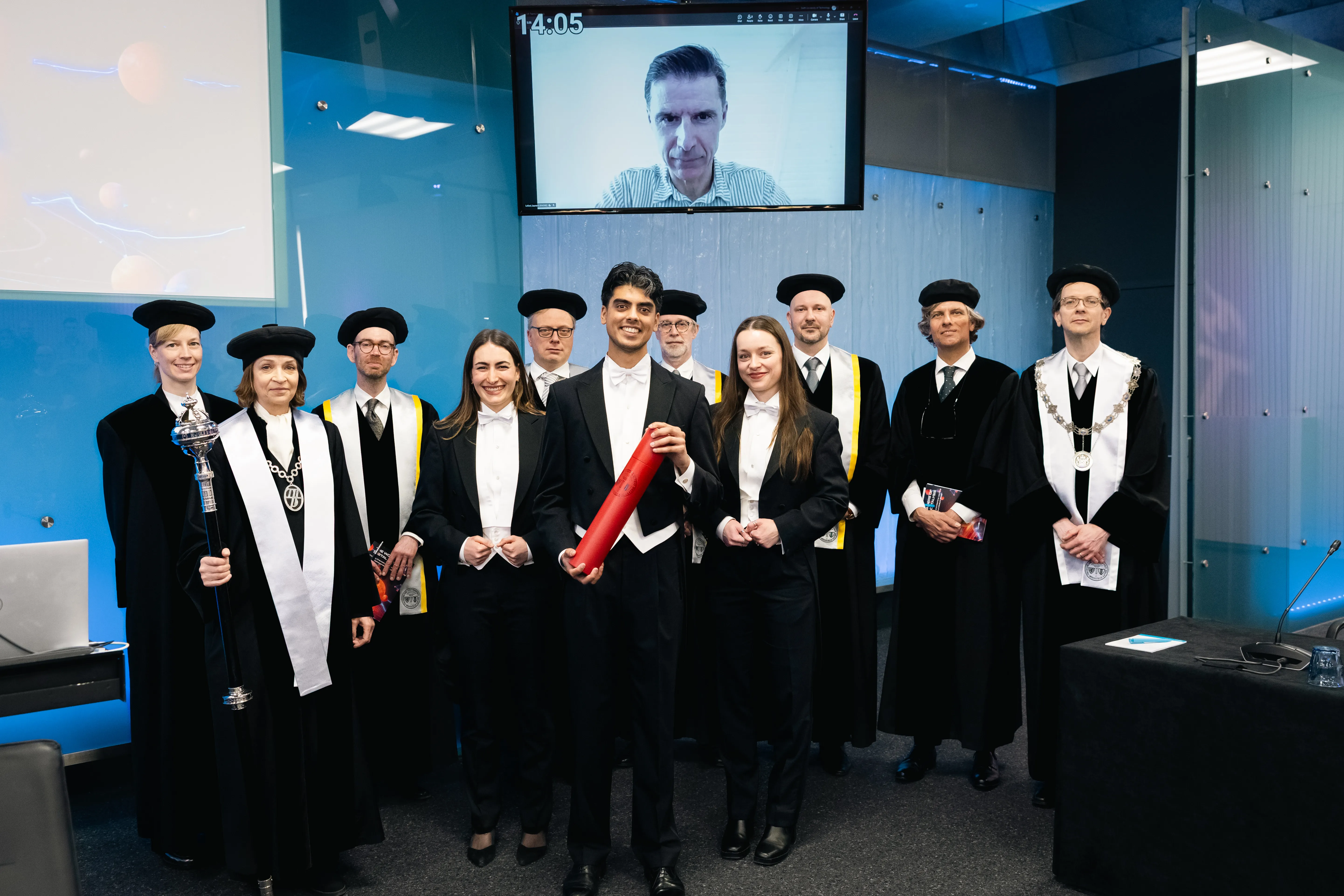
Adarsh has defended his PhD thesis titled "The wonders of digital catalysis" with a Cum Laude distinction.
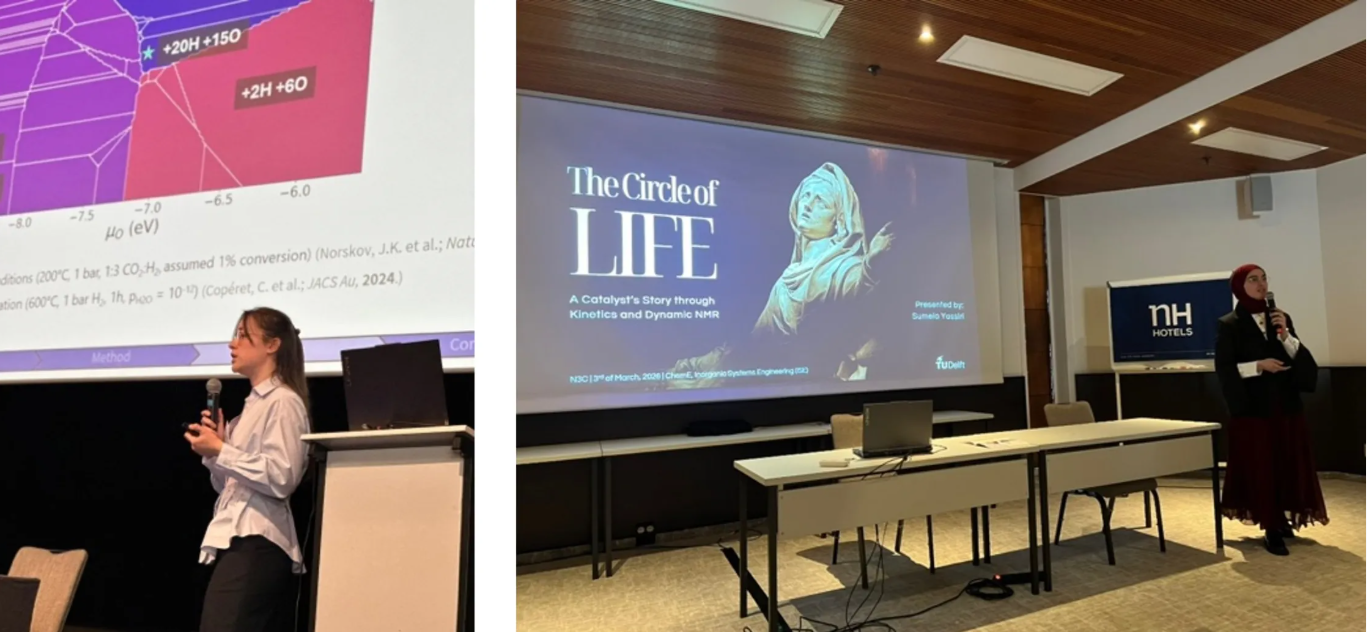
Sumeia Yassiri and Margareth Baidun both won best Lecture Award at the NCCC conference.
EAP gave a keynote talk "(The Challenges of) Condition-Dependent Dynamics for Data-Driven Catalyst Design" at the UK Catalysis Conference in Loughborough
Key research projects, organizations, and symposia we actively participate in
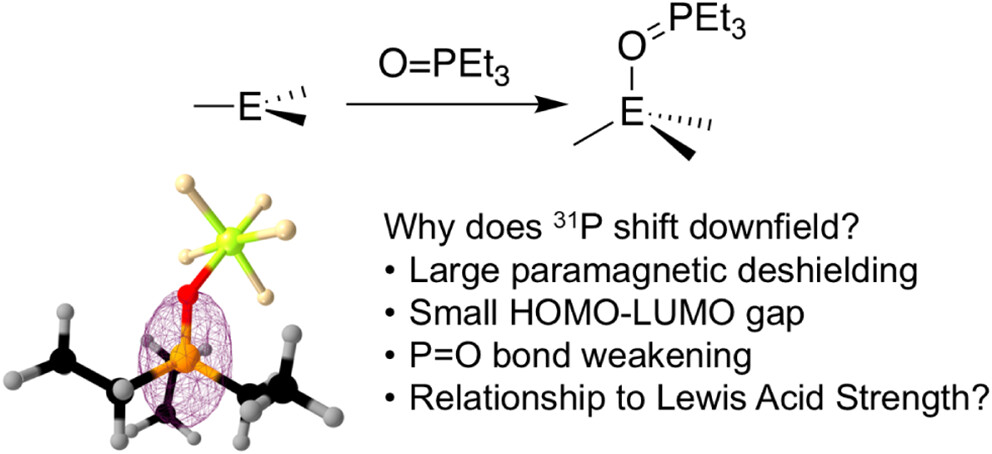
In silico studies of reaction mechanisms using quantum chemistry and machine learning interatomic potentials
Real-time computational description of catalytic systems under working conditions
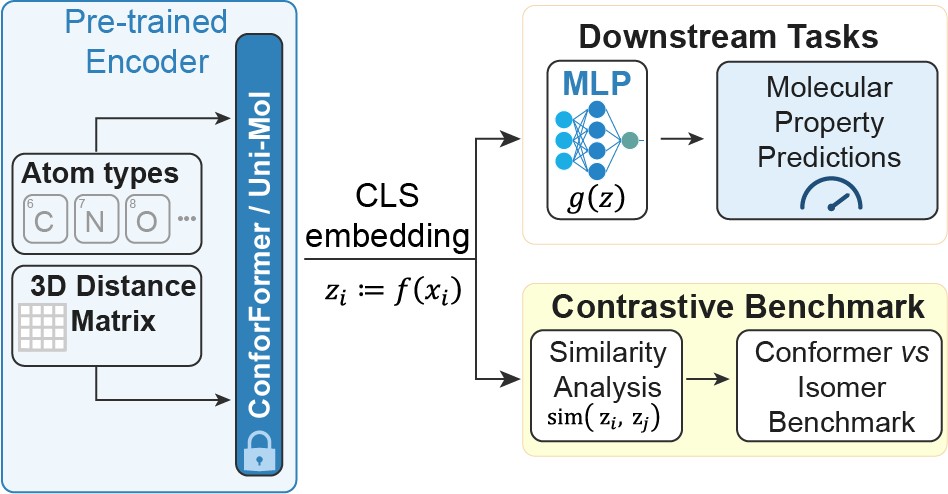
Machine learning approaches for accelerating catalysis research and discovery
Automation and integration of kinetic and spectroscopic analysis of complex reaction mixtures
Kinetic studies, development and optimization of molecular catalysts
Theory and practice of catalytic conversions at interfaces and in confined spaces
CO₂ utilization, biomass conversion, plastic upcycling
PidkoLab @ TU Delft | Department of Chemical Engineering
Delft University of Technology